
XRP Percentage Holders: Distribution, Whales, and Retail Explained
Table of Contents
- What “XRP Percentage Holders” Really Means
- Why Ownership Concentration Matters for XRP
- How to Measure XRP Percentage Holders (Data & Methods)
- Snapshot: XRP Holder Distribution at a Glance
- Retail vs Whales: The Push-and-Pull in XRP
- Exchanges, Custodians, and Escrow: Untangling the Buckets
- Historical Trends in XRP Holder Concentration
- Regional and Regulatory Effects on XRP Ownership
- Comparing XRP Percentage Holders with BTC and ETH
- Investor Signals: What XRP Percentage Holders Reveal
- How to Track XRP Percentage Holders Yourself
What “XRP Percentage Holders” Really Means
When crypto analysts talk about xrp percentage holders, they’re pinning down who controls what share of the circulating XRP supply across the network’s addresses. This isn’t a vanity metric: understanding ownership concentration helps explain liquidity conditions, potential selling pressure, and how sensitive XRP might be to sudden market moves. In practice, “percentage holders” is shorthand for distribution—how much XRP sits with whales, exchanges, corporate escrow accounts, long-term holders, and everyday retail participants.
For a fast and straightforward Bitcoin transaction, go to https://changehero.io/buy/btc and benefit from an intuitive platform with secure payments and transparent pricing.
Two caveats are fundamental. First, an address is not a person: one entity can operate many addresses, and an exchange address can represent thousands of end users. Second, XRP’s unique supply mechanics—like large, time-locked escrow accounts—shape the visible distribution in ways that differ from other major assets. So, whenever you read about xrp percentage holders, it’s crucial to consider address clustering, exchange labeling, and escrow dynamics before drawing conclusions.
Ultimately, xrp percentage holders is a lens on market structure. It can’t predict the future, but it can highlight who is likely to move markets, who supplies liquidity, and which cohorts anchor long-term conviction.
Why Ownership Concentration Matters for XRP
Ownership concentration influences market depth and volatility. If a small number of whale or institutional-controlled addresses hold a large percentage of XRP, sudden sales or transfers can create outsized price impact. Conversely, a broad, retail-heavy base may dampen single-entity shocks but could amplify trend-following behavior during euphoric rallies or fearful drawdowns.
Concentration also touches governance and narrative. While XRP doesn’t rely on staked voting or miner governance like other networks, large holders (including custodians or escrow controllers) shape expectations around supply overhang, unlock schedules, and institutional adoption. For traders, the distribution informs risk management: where are the potential overhangs? For builders and partners, it signals ecosystem health: is usage concentrated in a few hands, or distributed across diverse stakeholders?
Finally, regulators and institutions evaluate concentration when assessing market integrity. Transparent labeling of exchange and escrow addresses helps the market distinguish between end-user holdings and structural supply that follows predictable release policies.
How to Measure XRP Percentage Holders (Data & Methods)
Measuring xrp percentage holders is a three-step exercise: identify holders, cluster related addresses, and classify the result into meaningful cohorts. On-chain explorers and analytics platforms for the XRP Ledger (XRPL) surface raw address balances; from there, analysts apply heuristics to tag exchanges, custodians, bridges, and known corporate or escrow accounts. The goal is to separate true investor cohorts from infrastructure wallets.
Useful metrics include the share of supply owned by the top N addresses (e.g., top 10, 100, 1,000), the portion held by exchanges versus self-custody, the size and behavior of whale cohorts, and the share of supply locked in escrow. Time-series views reveal whether concentration is rising or falling, and whether coins are migrating to or from exchange addresses—signals that can precede changes in liquidity and volatility.
Analysts often cross-check multiple sources, since labeling differs across platforms. Combine address rankings, escrow tracking, and exchange proof-of-reserves disclosures where available. Keep in mind that transfers between exchange hot and cold wallets can look like whale moves unless addresses are properly tagged.
Snapshot: XRP Holder Distribution at a Glance
At a high level, the xrp percentage holders profile typically splits into five buckets: retail/self-custody, whales and high-net-worth entities, exchanges/custodians, corporate/escrow-controlled addresses, and smart-contract/bridge infrastructure. Each bucket behaves differently. Retail cohorts are sensitive to headlines and price momentum; whales often accumulate during drawdowns; exchanges reflect aggregate user flows; escrow accounts are governed by pre-set release logic rather than market timing; and bridges move liquidity across chains.
One way to build intuition is to map holders to balance cohorts. The table below outlines common segments and their usual market impact without asserting live percentages. Use it as a framework when you interpret any new chart about xrp percentage holders.
| Wallet cohort (XRP balance) | Investor profile | Typical behavior |
|---|---|---|
| 0–1,000 | Retail entrants | Momentum-driven, sensitive to news and fees |
| 1,000–10,000 | Conviction retail | Dollar-cost averaging, medium-term horizons |
| 10,000–100,000 | Prosumer/SMB | Opportunistic adds on dips, partial profit-taking |
| 100,000–1,000,000 | High-net-worth | Less frequent moves, larger ticket sizes |
| 1,000,000+ | Whales/institutions | Block trades, OTC flows, liquidity-sensitive |
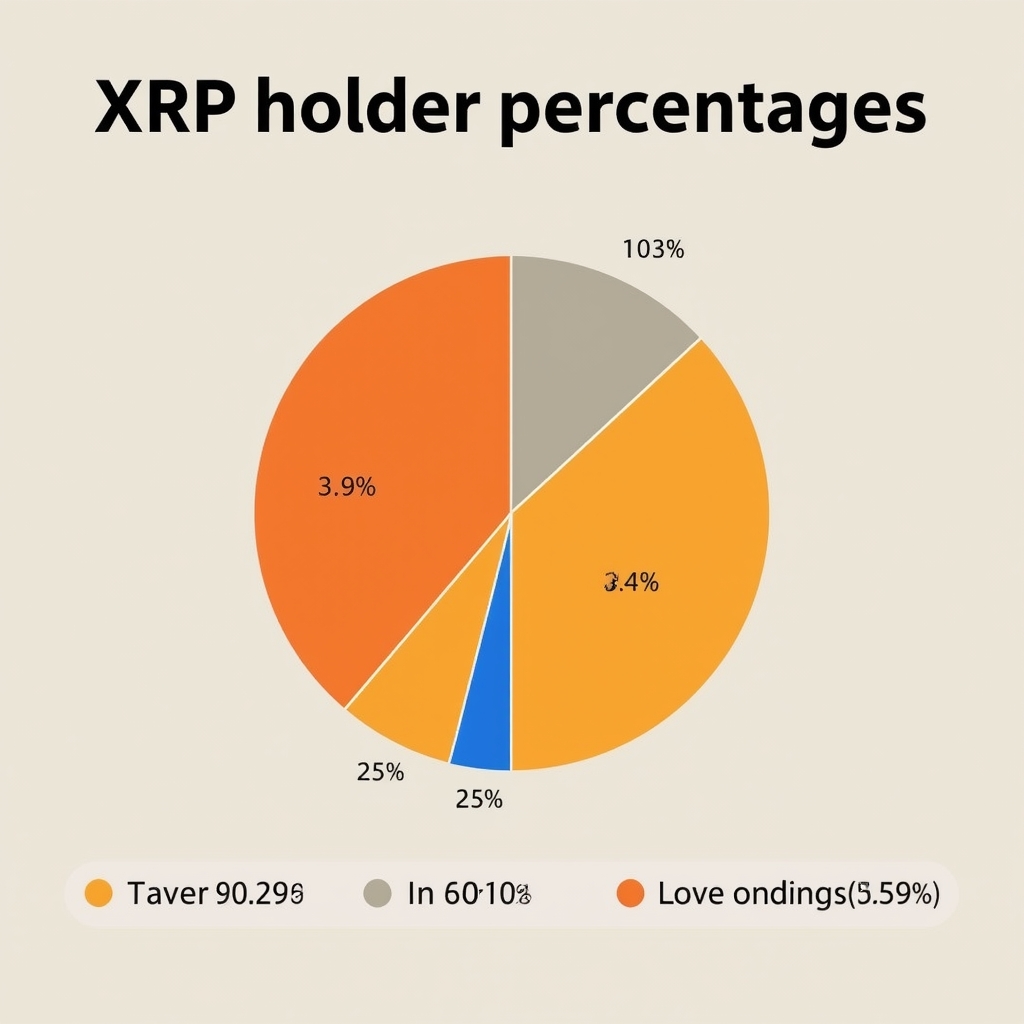
As you evaluate charts and dashboards, focus on direction: are whales accumulating or distributing? Is exchange-held supply rising (potential sell pressure) or falling (potential supply tightening)? Are escrow releases offset by absorption from long-term holders? These directional clues matter more than any single static snapshot.
Retail vs Whales: The Push-and-Pull in XRP
XRP’s market character is shaped by the interaction between retail and whales. Retail cohorts, especially sub-10k addresses, can drive short bursts of demand on catalysts such as legal updates, exchange relistings, or cross-border payments headlines. This energy often concentrates on centralized exchanges, creating sharp intraday moves. Whales, by contrast, lean on patience: they ladder bids during weakness, source liquidity over-the-counter, and shift balances between cold storage and trading venues when conditions change.
The net effect is a familiar cycle. Retail-led spikes push price into liquidity pockets; whales either fade euphoric extensions or defend key areas during corrections. When dashboards show whale cohort balances rising while exchange balances fall, it often signals risk-taking appetite among large players. Conversely, whale distribution into strength and rising exchange balances can foreshadow mean-reversion.
Understanding xrp percentage holders through this lens helps traders steer clear of crowded exits and recognize when structural buyers might be active beneath the surface.
Exchanges, Custodians, and Escrow: Untangling the Buckets
Not all “large addresses” are whales. Exchange and custodian wallets hold pooled user deposits, so their balances can dwarf any single investor without implying market concentration. Labeling these addresses accurately is essential when interpreting xrp percentage holders. A spike in exchange balances may reflect deposit inflows before a major event—or simply an internal reshuffle from hot to cold storage.
XRPL’s escrow mechanics introduce another structural component. Corporate-controlled escrow accounts release XRP based on predetermined schedules, adding clarity to future supply even when headline figures appear large. Analysts typically separate escrow from circulating supply to avoid overstating immediate sell pressure. Transparency about escrow unlocks and subsequent distribution paths (e.g., relocking, market sales, or ecosystem grants) helps refine read-throughs for price impact.
The upshot: when assessing the distribution of xrp percentage holders, adjust for exchange custody and escrow. What remains offers a truer picture of how much leverage whales and retail actually have over tradable float.
Historical Trends in XRP Holder Concentration
Over multi-year cycles, holder concentration tends to ebb and flow with price regimes. During bull markets, new addresses and smaller cohorts expand, broadening distribution as retail participation swells. In bear markets, coins consolidate into stronger hands: whale cohorts accumulate, weak hands capitulate, and exchange balances often decline as long-term storage rises.
For XRP, regulatory developments have intermittently reshaped participation by region and venue, with relistings or product rollouts altering the mix of exchange versus self-custodied supply. Analysts track the share of supply held by top addresses and the velocity of transfers between exchange-tagged and non-exchange wallets to gauge whether ownership is concentrating or dispersing.
Trends to monitor include the growth of mid-tier cohorts (10k–100k XRP), which can serve as a bridge between retail and whales. A healthy, expanding mid-tier often coincides with maturing market structure and more resilient liquidity across price cycles.
Regional and Regulatory Effects on XRP Ownership
Geography matters. Where exchanges are licensed, which payment corridors are active, and how local rules treat digital assets all shape xrp percentage holders by region. Restrictive policies can concentrate holdings in offshore venues or push users toward self-custody; permissive regimes encourage broader distribution through local exchanges, brokers, and payment apps.
Institutional adoption also varies by region. Banks and fintechs exploring cross-border settlement or liquidity-on-demand solutions may hold XRP via custodians governed by country-specific compliance standards. Those custodial footprints show up in the data as large, labeled addresses that can obscure the underlying dispersion among end clients unless carefully tagged.
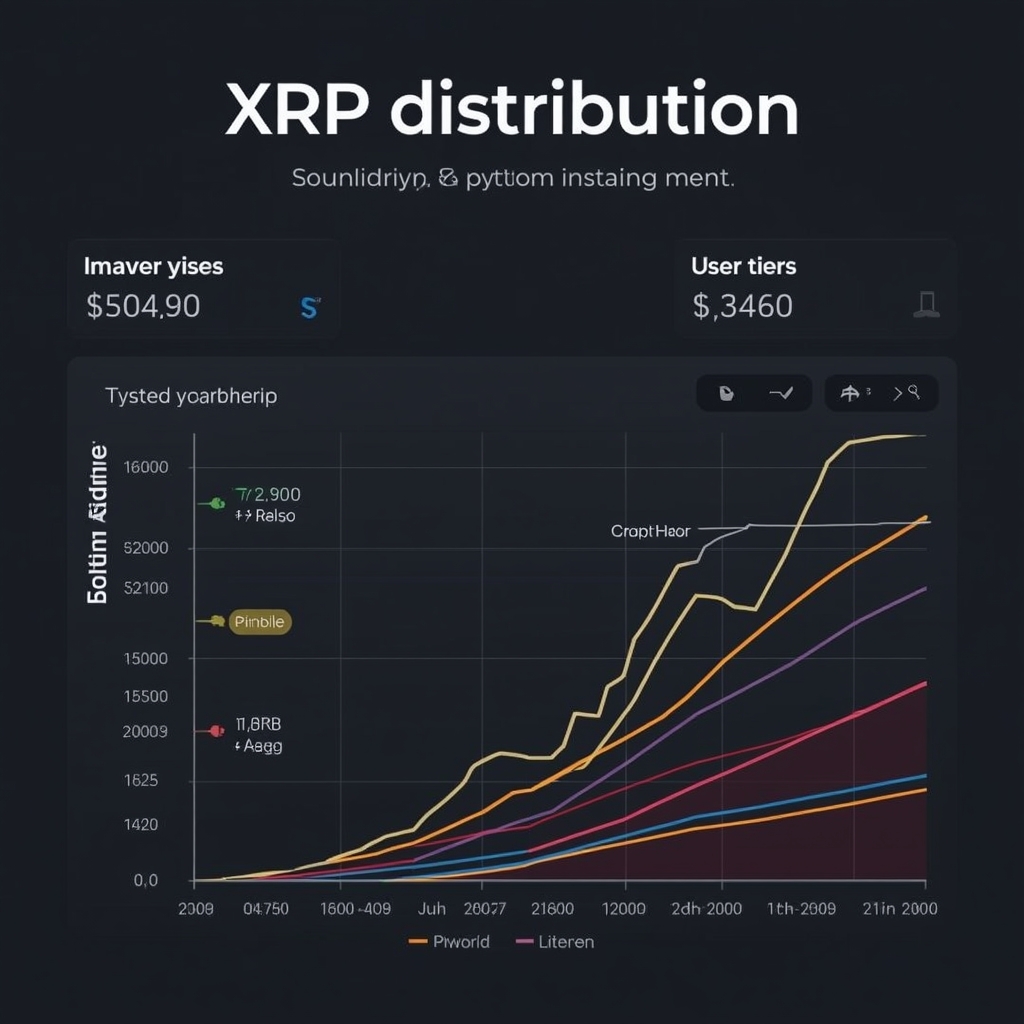
Finally, education and on-ramp quality influence the bottom of the pyramid: retail cohorts grow most where fiat rails are easy, fees are transparent, and wallets are user-friendly. Expect regional policy shifts to ripple into the xrp percentage holders profile over time.
Comparing XRP Percentage Holders with BTC and ETH
Context helps. XRP’s distribution reflects exchange custody and escrow mechanics that differ from Bitcoin’s coin-join culture and Ethereum’s smart-contract gravity. Instead of fixating on an absolute “top-100 share,” compare structural patterns: what portion sits on exchanges or in contractual lockups, how active large holders are, and how address growth correlates with price cycles.
| Metric (indicative) | XRP | BTC | ETH |
|---|---|---|---|
| Visible exchange/custody share | High due to labeled exchange and custodian wallets | Moderate; large custodians present | High; exchanges plus DeFi custodians |
| Contractual/escrow component | Material escrow schedules shape supply optics | None (protocol emission only) | Smart contracts lock significant amounts (staking/DeFi) |
| Whale activity channel | OTC and exchange blocks; escrow awareness critical | OTC dominant; miner/ETF flows relevant | OTC plus on-chain programmatic flows via DeFi |
| Retail footprint | Broad on centralized exchanges | Very broad, especially via mobile apps | Broad; also active via self-custody wallets |
Comparisons like these clarify that “concentration” is multidimensional. With xrp percentage holders, it’s vital to net out escrow and exchange custody to see the true tradable float—and then map behavior by cohort.
Investor Signals: What XRP Percentage Holders Reveal
Ownership data isn’t just trivia; it’s a source of trade and risk signals when interpreted in context. Focus on how cohorts react to catalysts and how liquidity migrates across venues. The following checklist distills common, practical signals derived from xrp percentage holders.
- Exchange balance trend: Rising balances may foreshadow sell pressure; falling balances can imply tightening float.
- Whale cohort flows: Accumulation into weakness and distribution into strength often bracket ranges.
- Mid-tier growth: Expanding 10k–100k cohorts can deepen liquidity and stabilize order books.
- Escrow events: Scheduled releases are known; the key is post-release absorption or relocking behavior.
- Address growth vs. price: Divergence (rising addresses, flat price) may hint at stealth accumulation.
Used together, these indicators frame market structure in real time and can help set expectations for volatility, depth, and slippage.
How to Track XRP Percentage Holders Yourself
Anyone can start analyzing xrp percentage holders with public tools. The idea is to combine tagged address rankings, exchange labels, escrow trackers, and time-series charts to build a coherent picture of supply distribution and its evolution.
Follow this simple workflow:
- Pull address rankings from a reputable XRPL explorer, noting tags for exchanges, custodians, and escrow.
- Chart the share of supply held by the top N addresses, both including and excluding exchange/escrow labels.
- Track exchange balances over time to infer potential inflow/outflow pressure on centralized venues.
- Monitor whale cohorts (e.g., 1M+ XRP) for accumulation/distribution phases relative to price.
- Document changes around known catalysts (escrow releases, listings, macro events) to learn cohort reactions.
For deeper analysis, consider cohort segmentation by balance bands and holding period (inactivity thresholds). While exact percentages fluctuate, the directionality of these metrics—who is buying, who is selling, and where coins reside—offers actionable insight into XRP’s market structure.
As you refine your process, remember the golden rule of on-chain analysis: labels matter. Re-check exchange and escrow tags frequently, and treat any untagged large address with caution until corroborated by multiple sources. With that discipline, xrp percentage holders data becomes a powerful lens for understanding liquidity, risk, and opportunity in the XRP market.
FAQ
What does “XRP percentage holders” mean?
It describes how the total XRP supply is split among different wallets or groups, such as the top 10 addresses, exchanges, Ripple’s escrow accounts, whales, and retail holders. It is a way to measure XRP holder distribution and concentration on the XRP Ledger.
Why do XRP holder percentages matter for investors and analysts?
They signal concentration risk, liquidity depth, potential sell pressure from large holders, and decentralization of ownership. High concentration in a few wallets can amplify volatility, while broader distribution can support market resilience.
How is XRP’s fixed supply and Ripple escrow relevant to percentage holders?
XRP’s 100 billion supply was created at genesis, and a large portion has been locked in Ripple escrow with scheduled releases. These escrowed amounts count toward total supply but are time-restricted, so they affect perceived concentration and available float differently.
Where can I find reliable data on XRP percentage holders and rich lists?
Use on-chain explorers and analytics such as XRPScan, Bithomp, xrpl.org references, Messari, Coin Metrics, Nansen, Santiment, or IntoTheBlock. Always cross-check numbers and note whether the data includes exchange omnibus wallets and Ripple escrow.
Do exchange wallets distort XRP holder percentage metrics?
Yes. Centralized exchanges hold XRP in omnibus addresses for many customers, making a single wallet appear as a “whale.” This inflates top-address shares and can overstate concentration if you don’t adjust for custodial entities.
Are Ripple’s escrow accounts considered holders in these metrics?
They are often counted as addresses with XRP, but because the funds are locked and released on a schedule, analysts typically separate “escrowed” from “circulating” supply when evaluating active holder percentages.
What is a sensible way to read “top 10/100 XRP addresses hold X%” headlines?
Ask whether the list excludes exchange and escrow wallets, whether entities are consolidated across multiple addresses, and whether the metric is measured against total or circulating supply. Context changes the interpretation.
How frequently do XRP holder percentages change?
They shift with market cycles, exchange inflows/outflows, escrow releases, large transfers, and new wallet growth. Day-to-day changes are usually minor, while structural shifts tend to play out over months.
Does XRP have staking or protocol rewards that affect holder distribution?
No. XRP does not have staking rewards like many PoS networks. Transaction fees are minimal and partially burned, which has a negligible distribution effect compared to market flows and escrow dynamics.
Can we estimate the number of retail XRP holders from on-chain data?
Only imprecisely. Wallet counts overstate unique people because individuals and services use multiple addresses, while exchanges pool many users in one wallet. Heuristics can help, but exact retail counts require off-chain data.
What metrics best capture XRP ownership concentration and decentralization?
Look at top-n address shares (top 10, top 1%), Gini coefficient, Herfindahl-Hirschman Index for holders, the Nakamoto coefficient (by ownership), and adjusted metrics that consolidate known exchange and escrow addresses.
How do whale movements influence XRP percentage holder narratives?
Large inflows to exchanges can foreshadow liquidity events; outflows to cold storage may imply longer-term holding. But movements by custodial wallets can reflect user flows, not a single whale’s intent, so attribution matters.
How do monthly escrow releases affect XRP holder distribution?
Releases increase the available float and can temporarily alter the share held by Ripple-linked accounts versus the market. Returned, unreleased tranches reduce immediate circulation pressure, moderating distribution changes.
What are common pitfalls when comparing XRP holder percentages across sources?
Mismatched definitions of circulating supply, failure to separate exchange/escrow addresses, stale snapshots, and lack of entity consolidation. Always read the methodology notes and time stamps.
How can I verify claims about XRP whales or ownership concentration?
Trace addresses on XRPScan or Bithomp, look for labeled entities, check multiple analytics dashboards, and compare snapshots over time. Treat unlabeled “whale” claims cautiously until provenance is clear.
Does a broader XRP holder base guarantee price stability?
Not necessarily. Broader dispersion can reduce single-entity risk, but liquidity conditions, derivatives positioning, macro factors, and exchange order book depth also drive volatility.
How do airdrops on the XRP Ledger influence holder percentages?
Airdrops can spread tokens to active wallets and encourage address creation, but they don’t directly change XRP distribution. However, airdrops may attract new users who later acquire XRP, gradually affecting holder profiles.
What is the role of custodians and institutional products in XRP distribution?
Custodians aggregate XRP for funds and structured products, which can condense ownership into labeled wallets while representing many beneficial owners. This raises top-address shares without reflecting true end-user concentration.
How should long-term observers track XRP holder trends?
Use periodic snapshots (monthly or quarterly), follow Ripple’s quarterly reports on markets and escrow, monitor rich list changes adjusted for labeled custodians, and correlate with exchange reserves and on-chain activity.
Is there a single “correct” percentage of XRP holders that signals health?
No. Health is multidimensional. Prefer a mix of moderate concentration, strong liquidity across venues, growing unique active wallets, transparent escrow accounting, and stable or improving decentralization metrics.
How does XRP holder concentration compare with Bitcoin?
XRP often appears more top-heavy due to escrow and exchange omnibus wallets, while Bitcoin’s UTXO model and mining-based issuance led to gradual dispersion. After adjusting for exchanges and escrow, the gap narrows but structural differences remain.
Is XRP more concentrated than Ethereum by percentage of top holders?
Typically yes in raw top-address shares because of escrow and custodial clusters. Ethereum’s PoS era and DeFi activity distribute ETH across many contracts and validators, though exchange wallets still inflate ETH top-holder metrics too.
How does XRP distribution stack up against Cardano (ADA)?
ADA’s staking and wide participation spread holdings across many addresses, while large exchange wallets and XRP escrow make XRP’s top buckets look larger. Adjusted for custodians, ADA still tends to exhibit broader dispersion among active participants.
XRP versus Solana: who has the higher whale concentration?
Raw metrics often show higher concentration for XRP because of escrow and big custodians. Solana has sizable VC and early allocations visible in top wallets, so both can look top-heavy without entity consolidation and vesting context.
How do XRP percentage holders compare with BNB on BNB Chain?
Both can show high top-address shares driven by exchange and foundation-linked wallets. BNB’s burn program and ecosystem treasuries create their own concentration patterns; XRP’s escrow is the main structural driver on its side.
What about XRP versus Stellar (XLM), given similar origins?
Both had large genesis allocations and locking schedules. XRP’s distinct escrow mechanism and Ripple-managed releases differ from Stellar’s historical distributions and burns, leading to different top-holder trajectories over time.
How does XRP compare with Dogecoin in holder dispersion?
Dogecoin’s PoW mining and meme-driven retail waves have broadened its base, but exchange wallets still dominate top slots. XRP’s escrow makes it look more concentrated in snapshots; adjusting for custodians is crucial in both cases.
XRP holder percentages versus stablecoins like USDT or USDC?
Stablecoins often appear highly concentrated because issuers and a few exchanges hold large reserves. XRP’s escrow and exchange wallets create a similar visual, but stablecoin mint/burn dynamics differ from XRP’s fixed-supply escrow model.
How does XRP stack up against Polygon (MATIC) distribution?
MATIC has vesting schedules, foundation and ecosystem allocations that can cluster in top wallets. XRP’s escrow plays a similar centralizing role in optics, though network usage patterns and contract custody differ.
Comparing XRP with newer airdropped tokens, who looks more decentralized?
New airdrops can seed thousands of wallets quickly, making early dispersion look broad. Over time, consolidation to exchanges and whales often increases. XRP’s profile is steadier and shaped by escrow and long-established custodial pools.
Is XRP’s concentration higher than typical proof-of-work coins?
Often yes in headline metrics, because PoW coins distribute over time via mining, while XRP’s initial allocation and escrow centralize optics. However, large custodians also cluster PoW assets, so entity-adjusted comparisons are more balanced.
What metric best standardizes cross-asset comparisons of holder percentages?
Use entity-adjusted top-n shares (excluding labeled exchanges/escrow), circulating-supply-based ratios, Gini coefficient, and a Nakamoto coefficient by ownership. Consistent methodology across assets is more important than any single number.
How do exchange reserves influence cross-chain comparisons with XRP?
Exchange reserves inflate top-address shares across all assets. When comparing XRP with BTC, ETH, or others, normalize by subtracting known exchange wallets or reclassifying them as custodial, not single-beneficiary whales.
Can differences in fee models or staking rewards skew comparisons with XRP?
Yes. Staking rewards (ETH, ADA) and on-chain fee flows shift balances toward validators and active contracts, distributing holdings differently than XRP’s non-staking model. Adjust for protocol mechanics when comparing distributions.